
The Start: Chur's Historic Charm
The Bernina Express begins its journey in Chur, Switzerland's oldest city. Nestled in the Rhine Valley, Chur is known for its well-preserved old town, where cobblestone streets wind past medieval buildings. The train departs from Chur's station, quickly leaving behind the urban landscape as it heads south.

Ascending to the Albula Pass
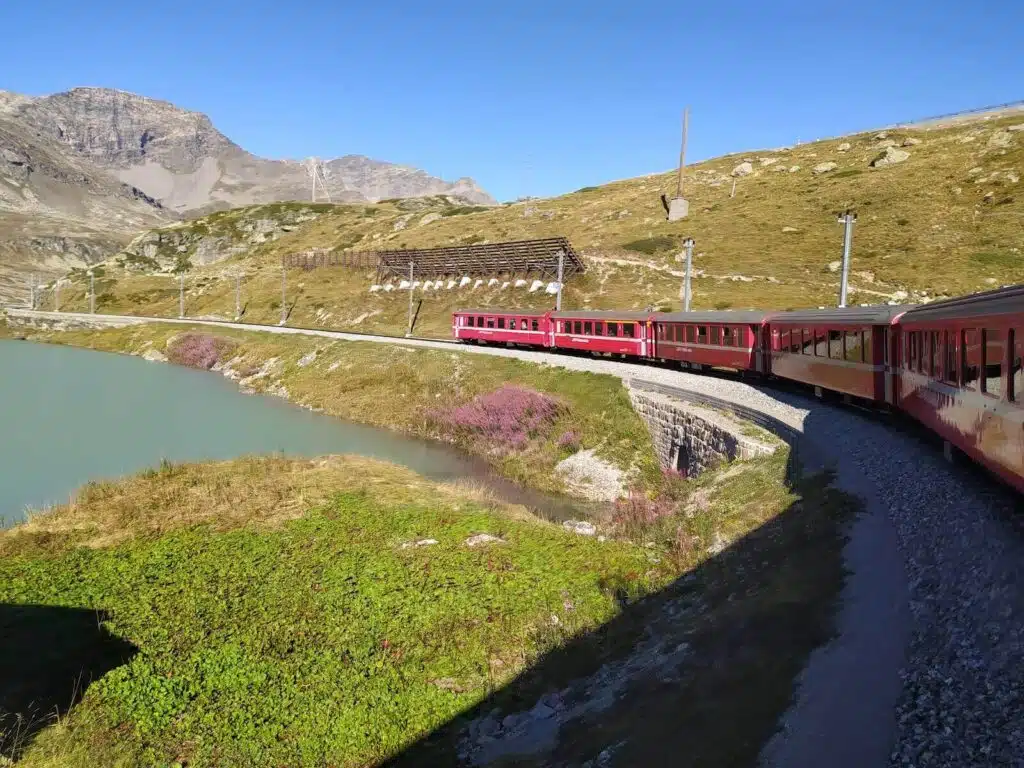
As the train climbs towards the Albula Pass, passengers are treated to views of the Landwasser Viaduct. This engineering marvel, with its six limestone arches, spans a deep gorge and is a UNESCO World Heritage site. The viaduct's dramatic curve and height make it a highlight of the journey.
Crossing the Bernina Pass
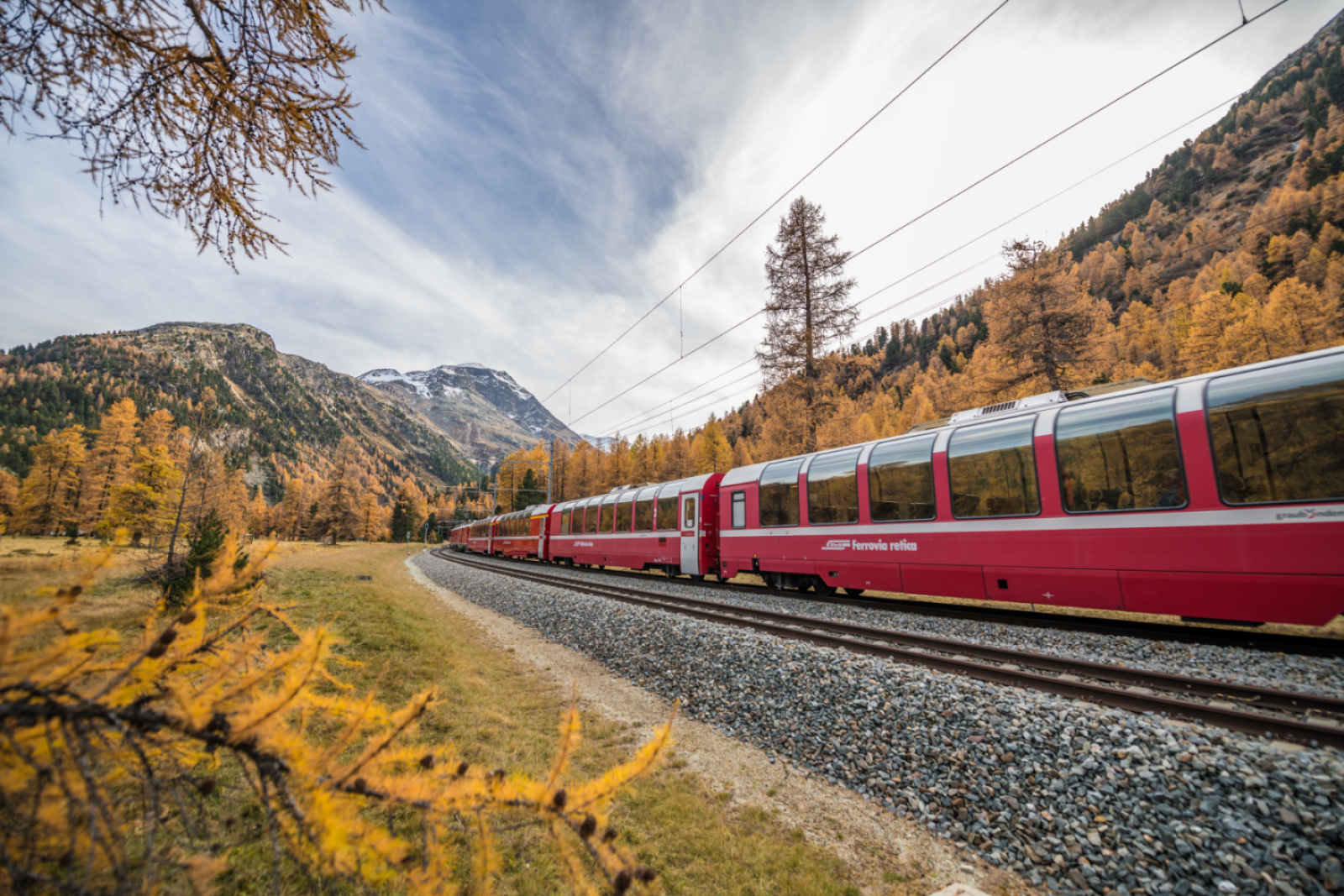
The Bernina Express reaches its highest point at the Bernina Pass, 2,253 meters above sea level. Here, the landscape transforms into a high alpine environment. Snow-capped peaks and glaciers dominate the view, with the Morteratsch Glacier being particularly striking. The train's large panoramic windows offer unobstructed views of this icy expanse.
Descending into the Poschiavo Valley
After crossing the pass, the train descends into the Poschiavo Valley. The change in scenery is dramatic, with lush green meadows and dense forests replacing the stark alpine terrain. The village of Poschiavo, with its Italianate architecture, reflects the cultural blend of this region.
The Spirals of Brusio
One of the most photographed sections of the route is the Brusio Spiral Viaduct. This circular viaduct allows the train to manage the steep descent into the valley. The train loops over itself, providing passengers with a unique perspective of the surrounding landscape.
Arrival in Tirano
The journey concludes in Tirano, Italy, where the Swiss Alps give way to the Italian countryside. Tirano's bustling piazza and historic churches offer a warm welcome. The transition from the alpine environment to the Mediterranean climate is palpable, marking the end of a remarkable journey through diverse landscapes.


0 comments